
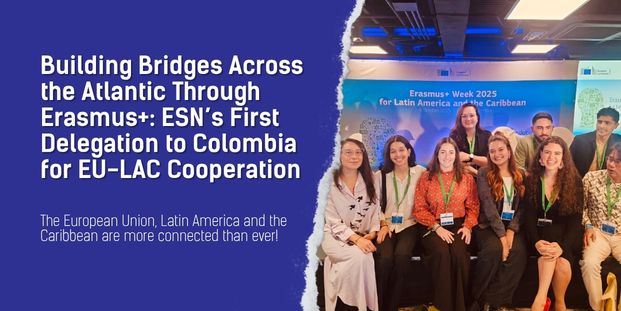
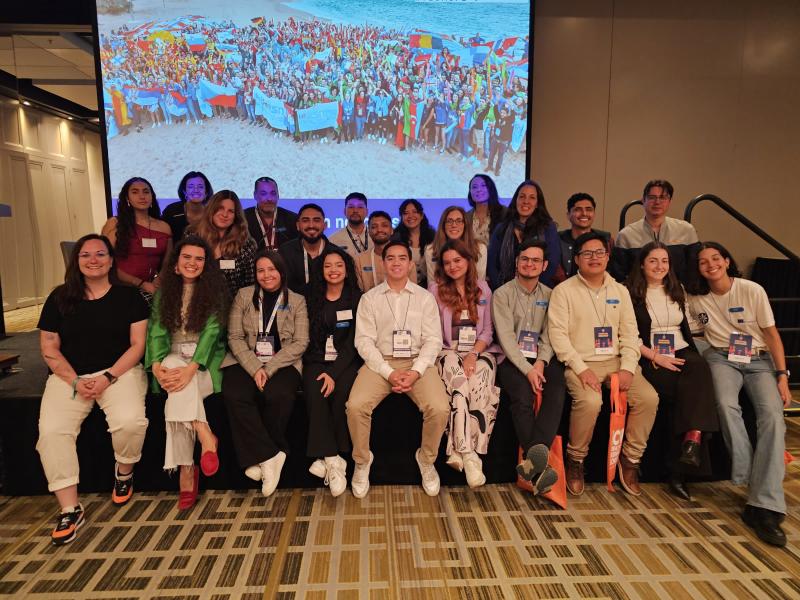
For the first time, the Erasmus Student Network (ESN) brought an official delegation to Colombia to participate in a week of high-level events dedicated to strengthening cooperation between Europe, Latin America and the Caribbean through education, mobility and people-to-people connections.
The EU, Latin America and the Caribbean (LAC) share a long-standing strategic partnership rooted in common values, democracy, human rights and international cooperation. Since the first EU-LAC Summit in Rio de Janeiro in 1999, both regions have continuously deepened their collaboration. Together, they represent 14% of the world’s population, 21% of global GDP, and one third of the United Nations membership: a powerful alliance in an increasingly interconnected and multipolar world.
In this context, ESN’s presence in Colombia symbolised the growing importance of student and alumni voices in shaping the future of international cooperation.
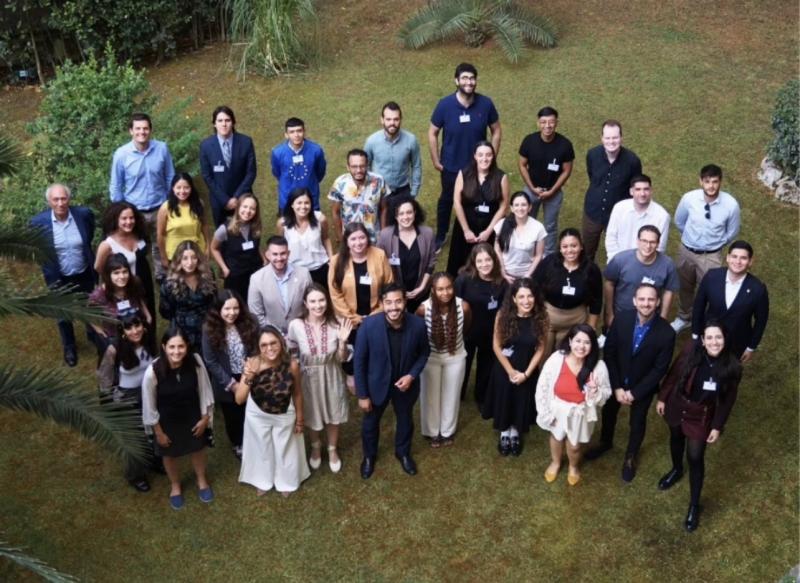
The ESN delegation included Martina Bo, Liaison Officer for the Americas, together with ESN volunteers Lesly Nicole Franco Torres, Andrea Rodriguez Garate, Andrea Sabiote Soler, Edwin Santiago Laguna Murillo, Eliana Quiñonez, Laura Velasco Zapata, Paula Ocharan and Yoan Mateus Arbelaez.
Throughout the week, ESNers contributed to discussions on mobility, inclusion, sustainability, policy-making and intercultural dialogue, while sharing personal stories that demonstrated the transformative impact of Erasmus+.
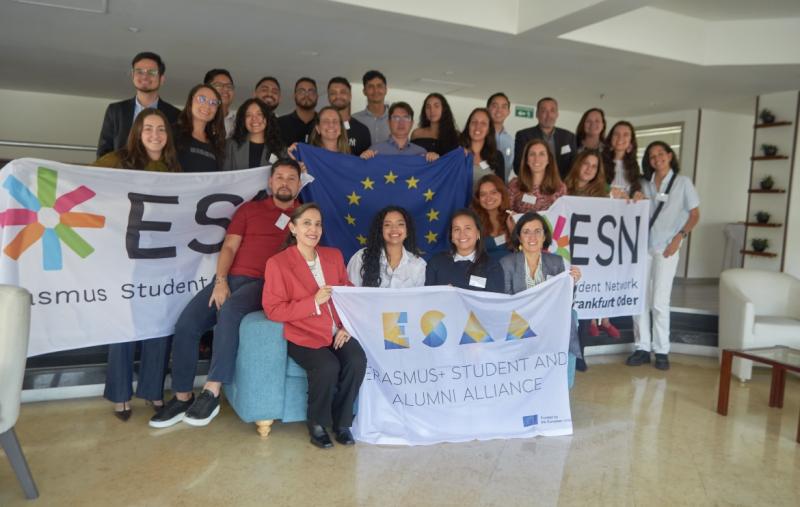
Opening the Week: Connecting with Colombian Students
The week began with a virtual fair organised by the German Academic Exchange Service (DAAD), bringing together Colombian students interested in international opportunities. ESN participated in an alumni testimonial panel featuring Yoan Mateus Arbelaez, who shared his Erasmus+ experience and encouraged students to embrace mobility opportunities abroad.
The session reflected one of ESN’s core principles: students helping students. By sharing first-hand experiences, ESN volunteers helped make international mobility more accessible and relatable for prospective participants.
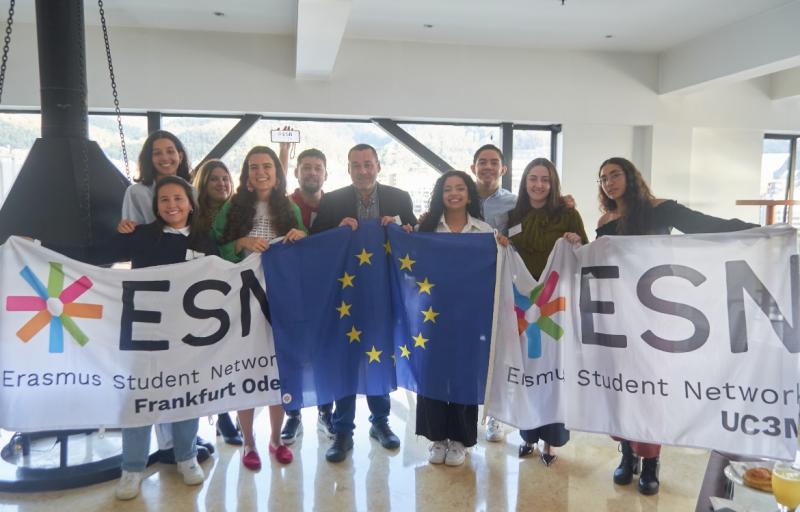
“Global Journeys, Shared Futures”: Erasmus+ Alumni Strengthening EU-LAC Relations
The next day, ESN participated in the event Global journeys, shared futures: Erasmus+ Alumni strengthening EU-LAC Relations, held in Bogotá.
The event gathered around 30 Erasmus+ alumni from organisations under the Erasmus+ Student and Alumni Alliance (ESAA) umbrella, including ESN, EMAA, GaragErasmus and OCEANS, alongside representatives from EU institutions and stakeholders committed to strengthening cooperation between Europe and Latin America (including from the European Commission and EU Delegation in Colombia).
Throughout the day, participants engaged in policy discussions, storytelling sessions, collaborative workshops and action-planning activities focused on the future of EU-LAC cooperation.
ESN volunteers actively contributed by sharing best practices from the association, recommendations from ESN’s policy paper “The current state of collaboration between the EU, Latin America and the Caribbean in the fields of internationalisation of higher education and student mobility”, and testimonies illustrating the impact of Erasmus+ on individuals and communities.
One of the most inspiring moments came during the impact narratives session, where participants reflected on how mobility transformed their lives.
“Going away from home, leaving friends, leaving family, speaking a new language, meeting new people… I thought it was impossible. But right now, I can tell little Eliana we did it!” - Eliana Quiñonez
Eliana’s story resonated with many participants who recognised the fears and uncertainties that often accompany mobility experiences, particularly for students who may not traditionally see international education as accessible.
Paula Ocharan highlighted the importance of ensuring that mobility opportunities become more inclusive and equitable:
“We are waiting for policymakers to grant small amounts of money so we can support students with visa processes before, during and after their mobility experience.” - Paula Ocharan
The event also showcased the vital role student organisations play in supporting incoming students and creating communities abroad.
“When I arrived in Sweden, I met ESN, and that changed my whole perspective. It made my experience so much better and I ended up going to Sweden again and joining another ESN section.” - Laura Velasco Zapata
Many participants stressed how Erasmus+ alumni become ambassadors for international cooperation long after their mobility ends.
“For me, the best tool to engage more people in Erasmus+ is to share everything I’ve done in my time in Germany, all the things I learned, the fun I had with my friends and the opportunities that came after I did my Erasmus.” - Edwin Santiago Laguna Murillo
During the collaborative project ideation session, participants explored ways to strengthen alumni engagement, increase outreach to underrepresented students, and build sustainable partnerships between Europe and Latin America.
The day concluded with a strong call to action: transforming Erasmus+ experiences into social impact engagement and regional cooperation.
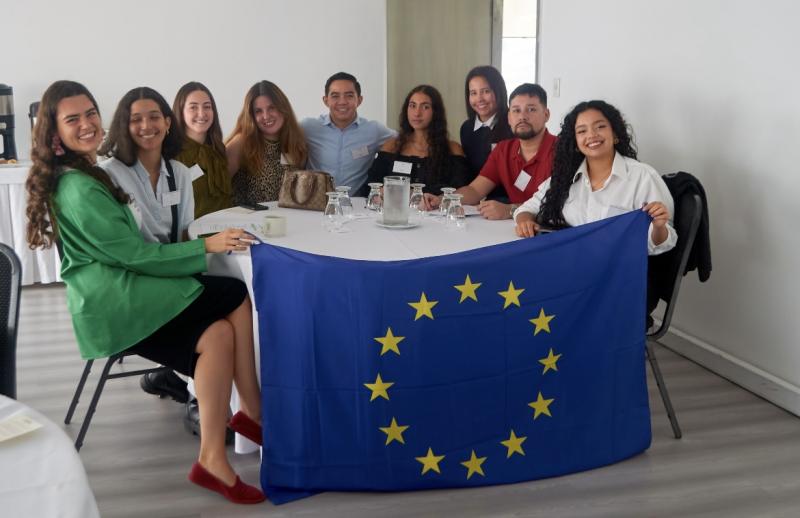
Students Helping Students: ESN at the “Study in Europe” Fair
The following day, ESN volunteers joined the Study in Europe Fair to promote Erasmus+ opportunities to Colombian students.
Through one-to-one conversations, testimonials and panel discussions, ESNers helped prospective students better understand the realities of studying abroad, application processes and the opportunities offered by Erasmus+.
Martina Bo and Paula Ocharan participated in a panel dedicated to sharing mobility experiences and discussing the broader value of international exchange.
The atmosphere throughout the day truly embodied ESN’s motto of “students helping students”. Beyond presenting information, volunteers created spaces for dialogue, reassurance and encouragement for young people considering mobility for the first time.
Strengthening Institutional and Grassroots Connections
The week continued with additional institutional and local initiatives. For example, Andrea Sabiote Soler represented ESN at an institutional event gathering Colombian universities and higher education stakeholders.
The discussions focused on strengthening international cooperation and fostering stronger educational partnerships between Europe, Latin America and the Caribbean.
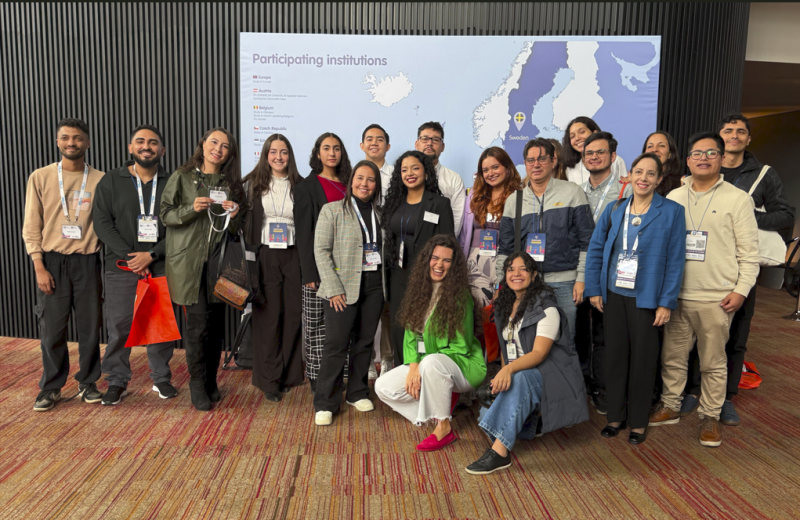
On the same day, Martina Bo travelled from Bogotá to Medellín to meet with GaragErasmus Medellín and learn more about their work fostering connections between Colombia and Europe, particularly Italy.
The visit offered an opportunity to discover how grassroots initiatives can create meaningful intercultural bridges. Through projects such as Casa Italia, local volunteers promote Italian language and culture in Colombia while strengthening understanding between both regions.
The meeting highlighted the power of alumni-led initiatives to create long-term impact far beyond the duration of a mobility experience.
Erasmus+ as a Platform for International Cooperation
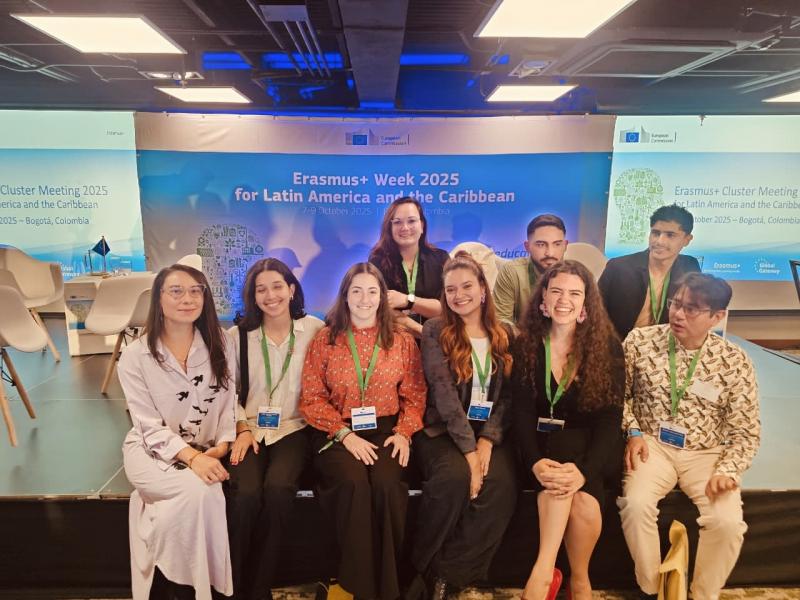
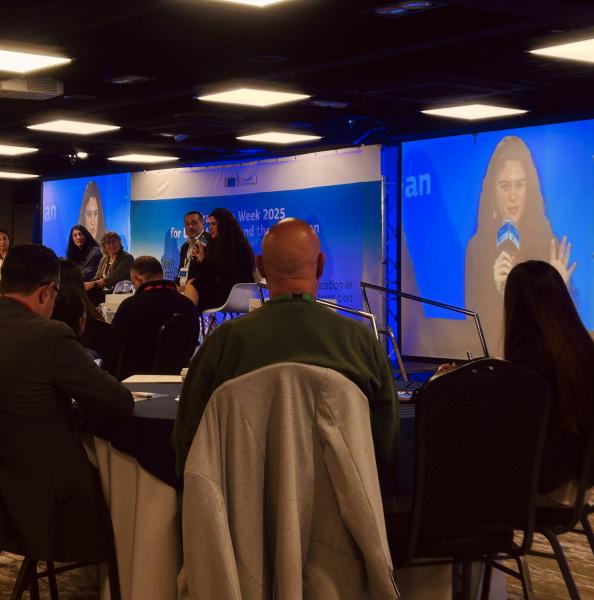
Martina Bo also participated in the Regional Erasmus+ Cluster Session and Contact-Making Seminar 2025 for Latin America and the Caribbean, organised by the Directorate-General for Education, Youth, Sport and Culture (DG EAC) of the European Commission and the European Education and Culture Executive Agency (EACEA).
The event brought together higher education institutions, vocational education and training providers, Erasmus+ National Focal Points, National Agencies, EU Delegations and education stakeholders from both regions.
This year’s discussions focused on the role of education in the green transition and showcased Erasmus+ projects addressing sustainability, climate action and innovation.
As ESN’s Liaison Officer for the Americas, Martina participated as a speaker in the opening panel alongside representatives from DG EAC, DG INTPA and the EU Delegation in Colombia, bringing the student perspective to discussions on the future of international cooperation.
The event also included networking workshops and contact-making sessions designed to foster future partnerships between institutions and organisations from Europe and Latin America.
For ESN, participation in these discussions represented an important opportunity to reinforce the role of students and alumni as active contributors to international cooperation, not merely beneficiaries of mobility programmes.
Concluding the Week: Higher Education in a Changing World
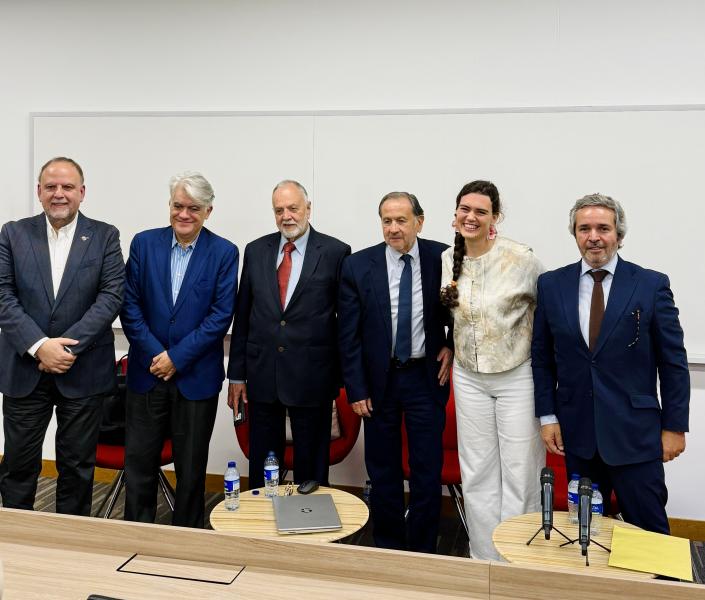
The week concluded with the VI Pre-Cumbre Académica organised by the Foro Académico Permanente ALC-UE at Universidad Externado de Colombia.
Martina Bo participated as a speaker in the panel “Higher Education in a World of Global Challenges and Strategic Threats”, discussing how international education and mobility can contribute to addressing shared global challenges.
Throughout the week, ESNers also had the opportunity to engage with key regional allies, including Jorge Téllez, Director of APICE - Asociación Panamericana de Instituciones de Crédito Educativo, and Luciano Rodrigues Marcelino, Founder of the Rectoral Board Institute of Brazil, strengthening connections for future collaboration across the region.
Erasmus+ and the Future of EU-LAC Cooperation
The events in Colombia demonstrated how Erasmus+ has become much more than a mobility programme. It is a platform for international cooperation, intercultural dialogue and global citizenship.
In an increasingly multipolar world marked by geopolitical tensions, climate crises, social inequalities and global uncertainty, international cooperation is more necessary than ever. The challenges societies face today transcend borders and cannot be solved in isolation.
Only through dialogue, collaboration and mutual understanding can sustainable solutions emerge.
This reflection was reinforced by ESN’s President, Simone Lepore, during the IV EU-LAC Youth Days organised by the EU-LAC Foundation. By bringing together young leaders from Europe, Latin America, and the Caribbean, the event strengthened interregional dialogue and provided a space for discussions on the main challenges faced by youth in both regions, such as digital transformation, climate justice, democratic participation, and security and youth rights. Participants developed policy recommendations for the EU-CELAC Summit, including the investment in Erasmus+ as a means to create regional bridges.
These recommendations were incorporated during the Summit held in Santa Marta, Colombia. In their Joint Declaration, leaders from both regions reaffirmed in fact their commitment to strengthening cultural, scientific and academic exchanges through initiatives such as Erasmus+ and Horizon Europe, recognising that people-to-people connections are essential for the EU-LAC partnership.
For ESN, Erasmus+ remains one of the strongest instruments for fostering these connections.
By enabling students, researchers and academic staff to move across borders, Erasmus+ creates bottom-up bridges between individuals, institutions and societies. International mobility contributes not only to academic development, but also to stronger global citizenship, greater openness and more resilient societies.
ESN strongly believes in Erasmus+ as a driver of international cooperation between the EU and the rest of the world. The association supports increased investment in International Credit Mobility, Erasmus Mundus, Capacity Building and Jean Monnet initiatives, as well as the development of a shared Education Area between Europe, Latin America and the Caribbean.
The experiences shared throughout the week in Colombia showed that mobility can transform lives, strengthen communities and inspire future generations to engage internationally.
As Martina Bo reflected at the end of the week:
“I am part of the Erasmus generation - united in diversity and not afraid to take a leap into the unknown. We enrich society through international mobility and create bridges between Latin America, the Caribbean and the EU. Join this movement: go on Erasmus, because once Erasmus, always Erasmus!”
Follow ESN