Why should students care?
The European Education Area (EEA) might sound like another EU policy initiative. But its ambitions can have a real impact on your student experience, from going on Erasmus+ to getting your credits recognised, accessing support and having a say in decisions about your education.
The EEA is about making education across Europe more connected and international. Its new cycle, covering 2026–2030, sets out how European countries should continue working together to make this happen.
Agreeing on ambitions is only the first stepStudents still face barriers to learning mobility, difficulties with academic recognition, financial and housing challenges and unequal access to support. We need to make sure that European commitments translate into real improvements in students’ everyday lives.
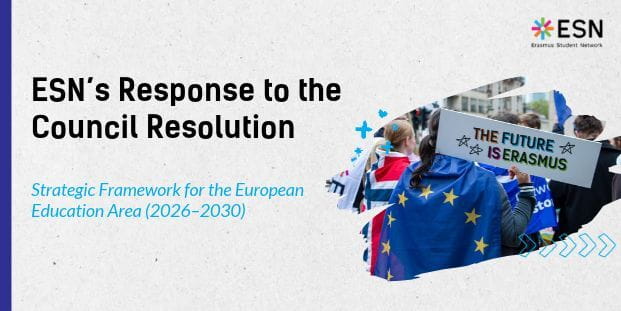
That’s why the Erasmus Student Network (ESN) has published its reaction to the new EEA framework. Building on ESN’s contributions to the interim evaluation of the EEA and the European Commission’s Implementation Dialogue, the report draws on ESN’s policy work and students’ experiences to highlight what needs to change, from making mobility more accessible and improving recognition to strengthening inclusion and cooperation between higher education institutions.
The report examines key areas of the renewed framework, including learning mobility, the recognition of qualifications and learning outcomes, flexible learning pathways, digital skills, citizenship education, inclusion and student wellbeing, vocational education and training, and European higher education cooperation. It identifies persistent challenges and puts forward recommendations to help turn European commitments into meaningful change.
ESN highlights the need to address financial and administrative barriers to mobility, improve the recognition of learning outcomes, strengthen support for students with fewer opportunities, and ensure that student wellbeing remains central to education policies. The report also emphasises the importance of meaningful student participation in education policymaking and institutional governance, recognising students and their representative organisations as equal partners in shaping the future of education in Europe.
As the European Education Area moves towards 2030, ESN calls for sustained political commitment, adequate investment and stronger cooperation between European and national stakeholders, education institutions and student representatives. The success of this second cycle will depend on translating shared ambitions into accessible, high-quality and inclusive learning opportunities for all.
Read the full report below to explore ESN’s analysis and recommendations for strengthening European cooperation in education and training. For more information, please contact ESN’s Policy Department at [email protected].

Follow ESN